
The Complete Guide to HVAC Business Automation: 15 Workflows That Run Themselves
From appointment reminders to maintenance agreement renewals, here are the automations that save HVAC contractors hours every week while capturing more revenue.
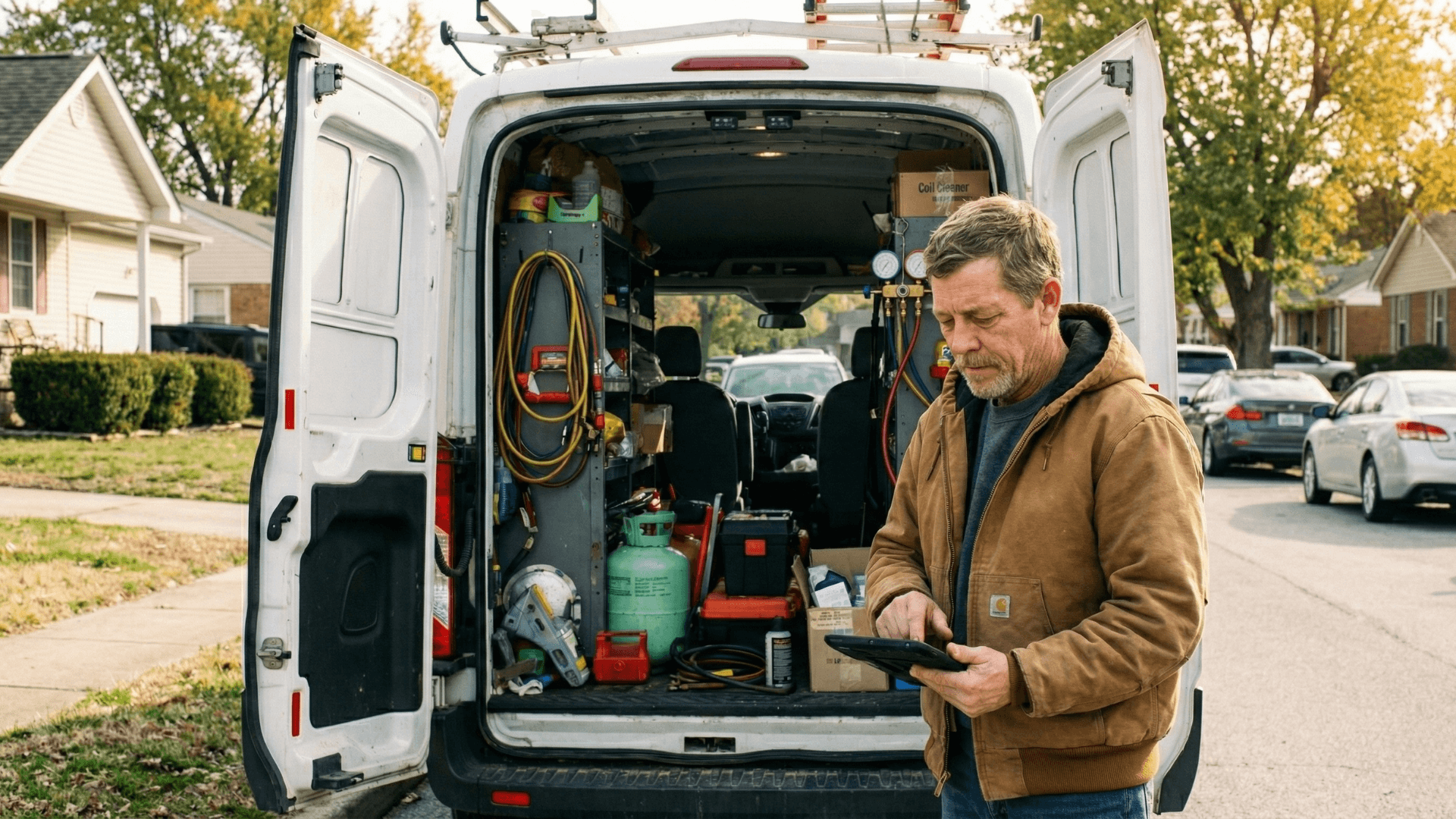
If you're running an HVAC business, you already know the chaos: phones ringing during a repair call, maintenance agreements expiring without renewal, estimates that never get followed up on, and reviews that never get requested.
What if all of that happened automatically?
In this guide, we'll cover 15 specific automations that HVAC contractors are using to save time, capture more revenue, and deliver better customer service—all without hiring additional staff.
Why Automation Matters for HVAC Businesses
Let's be real: you got into HVAC because you're good at HVAC, not because you love administrative work. But as your business grows, the admin burden grows faster. Every new customer means more follow-ups, more reminders, more paperwork.
Automation breaks this cycle. It lets you grow revenue without proportionally growing your workload.
Here's what typical HVAC contractors report after implementing automation:
- 5-10 hours saved per week on administrative tasks
- 30-50% improvement in estimate close rates
- 2-3x increase in online review volume
- 85%+ reduction in no-shows
- Maintenance agreement renewal rates above 80%
The 15 Must-Have HVAC Automations
Category 1: Lead Response & Booking
Automation #1: Instant Lead Response
When someone fills out your website contact form, an automated email and text goes out within 60 seconds acknowledging their request and telling them what to expect next.
Why it matters: Speed-to-lead is critical. Businesses that respond within 5 minutes are 21x more likely to qualify the lead than those that wait 30 minutes.
Automation #2: After-Hours Auto-Booking
When calls come in after hours, your AI receptionist or booking system captures the customer's information and offers available appointment slots for the next business day.
Why it matters: After-hours callers are often your most motivated customers—their AC just died or their furnace stopped working. Capture them before they call someone else.
Automation #3: Emergency Call Triage
Automatically identify true emergencies (gas leak, carbon monoxide, complete system failure) and route them to your on-call technician while scheduling non-urgent issues for regular hours.
Why it matters: Not every after-hours call is an emergency. This automation ensures you're only getting woken up for real emergencies while still capturing every lead.
Category 2: Appointment Management
Automation #4: 24-Hour Appointment Reminder
Send an automated text and email reminder 24 hours before every scheduled appointment with the date, time window, technician name, and easy rescheduling options.
Why it matters: Reminder texts reduce no-shows by up to 50%. Every no-show costs you both the lost revenue and the wasted drive time.
Automation #5: Day-Of Confirmation
Morning of the appointment, send a text asking customers to confirm they'll be home. If they need to reschedule, they can do it with one tap.
Why it matters: This catches last-minute conflicts and saves your technician from driving to an empty house.
Automation #6: Technician On-The-Way Alert
When your technician marks they're heading to a job, automatically send the customer a text with the technician's name, photo, and estimated arrival time.
Why it matters: Customers love knowing exactly when to expect you. It reduces 'where are you?' calls and builds trust.
Category 3: Sales & Follow-Up
Automation #7: Estimate Follow-Up Sequence
After sending an estimate, trigger a 5-touch follow-up sequence: Day 2 check-in, Day 5 value-add message, Day 10 urgency prompt, Day 21 soft close, and Day 45 hibernation break.
Why it matters: Most contractors send an estimate and wait. This automation ensures no estimate dies of neglect. Contractors using automated follow-up see 30-50% higher close rates.
Automation #8: Equipment Age Alerts
Track equipment age in your CRM. When a customer's unit approaches end-of-life (15+ years for AC, 20+ years for furnace), automatically notify your sales team to reach out about replacement options.
Why it matters: Proactive replacement conversations are more profitable than emergency replacements, and customers appreciate the heads-up.
Automation #9: Financing Follow-Up
For large quotes where financing was mentioned but not completed, send information about financing options with a direct link to apply.
Why it matters: Many customers want the new system but are hesitant about the upfront cost. Making financing easy can close deals that would otherwise stall.
Category 4: Maintenance & Retention
Automation #10: Seasonal Maintenance Reminders
Automatically remind customers to schedule their spring AC tune-up or fall furnace check-up based on when they last had service.
Why it matters: Maintenance is recurring revenue. These reminders fill your schedule during shoulder seasons and keep customers loyal.
Automation #11: Maintenance Agreement Renewal
60 days before a maintenance agreement expires, trigger a renewal sequence: initial reminder, benefits recap, renewal link, and if needed, a phone call from your team.
Why it matters: Maintenance agreement customers are 3-5x more likely to choose you for repairs and replacements. Automated renewals can push retention rates above 80%.
Automation #12: Warranty Expiration Alerts
Track equipment warranty dates and notify customers 90 days before expiration, offering extended warranty options or suggesting a system inspection.
Why it matters: This positions you as a trusted advisor and creates service opportunities.
Category 5: Reputation & Reviews
Automation #13: Post-Job Review Request
4-24 hours after a completed job, send an automated text thanking the customer and asking for a Google review with a direct link.
Why it matters: Timing is everything with reviews. Asking while the positive experience is fresh dramatically increases response rates. Contractors using automated review requests typically 2-3x their monthly review volume.
Automation #14: Negative Feedback Interception
Before sending customers to Google, ask 'How did we do?' with a simple rating. Low ratings trigger a private feedback form and alert your team, rather than going straight to a public review.
Why it matters: This gives you a chance to address issues before they become public negative reviews.
Automation #15: Review Response Notifications
Get instant alerts when new reviews come in (positive or negative) so you can respond promptly.
Why it matters: Responding to reviews—especially quickly—shows prospective customers that you care. Google also favors businesses that engage with their reviews.
Getting Started: The First 3 Automations to Implement
Feeling overwhelmed? You don't need to implement all 15 at once. Start with these three—they deliver the biggest impact with the least complexity:
- 24-Hour Appointment Reminder: Immediate reduction in no-shows
- Post-Job Review Request: Start building your review volume right away
- Estimate Follow-Up Sequence: Stop leaving money on the table with unsold quotes
Once these are running smoothly, add the others based on your biggest pain points.
Choosing the Right Automation Platform
Not all software is created equal when it comes to automation. Here's what to look for:
- HVAC-specific: General CRMs don't understand maintenance agreements, equipment tracking, or seasonal patterns
- No-code builder: You should be able to create and modify automations without calling tech support
- Multi-channel: Email, text, and phone call capabilities in one system
- Pre-built templates: Why build from scratch when proven workflows already exist?
- Integration-friendly: Should work with your existing scheduling, accounting, and communication tools
Ready to Automate Your HVAC Business?
Local Business Pro includes all 15 of these automations—pre-built and ready to customize for your business.
See How It WorksThe Bottom Line
Automation isn't about replacing the human touch in your business—it's about freeing you up to focus on what actually requires human judgment and expertise. Your customers don't need you personally reminding them about appointments or asking for reviews. They need you delivering excellent HVAC service.
The contractors who figure this out first will have a significant competitive advantage. They'll capture more leads, close more sales, retain more customers, and do it all while working fewer hours.
The question isn't whether to automate. It's how fast you can get started.

About Mike Chen
15-year HVAC veteran turned business consultant. Helps contractors streamline operations and grow revenue.
View full profile →Related Articles

How Much Revenue Are You Losing to Missed Calls? A Calculator for Service Businesses
Use our simple formula to calculate the true cost of missed calls for your service business. The numbers might surprise you—and cost you more than you think.

Service Business Benchmarks 2025: How Do You Compare?
Industry data on missed calls, close rates, response times, and more. See where your business stands against other contractors.