
Plumbing Estimate Follow-Up: The 5-Touch Sequence That Closes 40% More Jobs
Most plumbers send an estimate and wait. This proven follow-up sequence turns more quotes into booked jobs without being pushy.
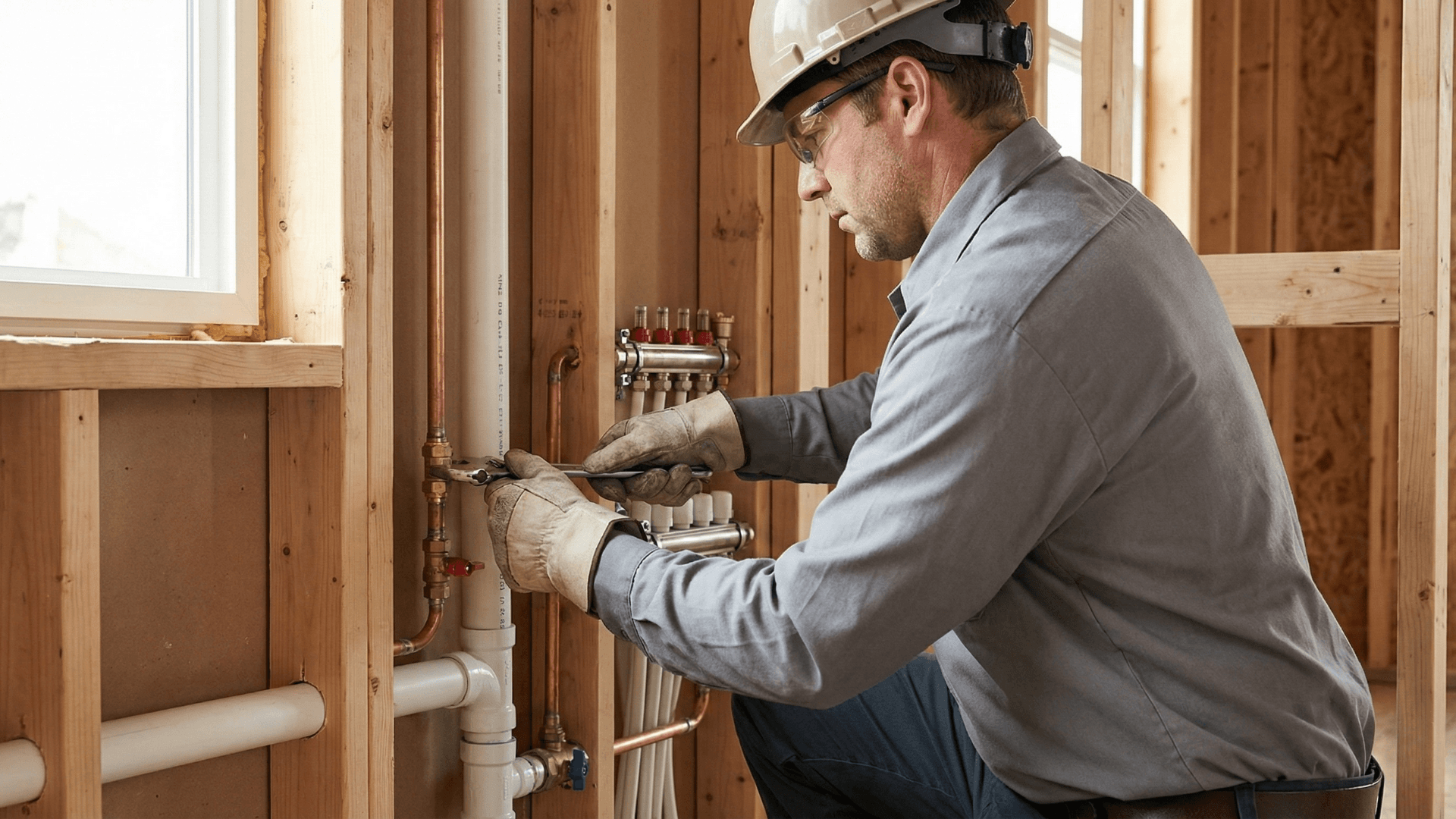
You just spent 45 minutes at a customer's home, diagnosing their problem, explaining options, and putting together a detailed estimate. You send it over, and then... crickets.
Sound familiar? Most plumbing contractors have a follow-up problem. They send estimates and wait, hoping customers will call back. Many never do—not because they don't want the work done, but because life gets in the way and your estimate gets buried.
Here's the follow-up sequence that's helping plumbers close 40% more of their open estimates.
Why Estimates Die Without Follow-Up
Before we get to the sequence, let's understand why follow-up matters so much for plumbing estimates specifically:
- Plumbing issues often aren't emergencies—customers 'learn to live with' slow drains and running toilets
- Estimates involve significant money, triggering decision paralysis
- Customers get multiple quotes and forget whose was whose
- Life distractions push home improvement decisions to the bottom of the priority list
- Customers assume if you wanted the job, you'd follow up (they're right)
The data backs this up: estimates with no follow-up close at 25%. Estimates with a structured follow-up sequence close at 45%+. That's nearly double the conversion rate.
The 5-Touch Follow-Up Sequence
Touch 1: The Day 2 Check-In (Text)
Timing: 48 hours after sending the estimate
Channel: Text message
Script:
"Hi [Name], this is [Your name] from [Company]. Just checking in on the estimate I sent for your [service]. Happy to answer any questions or walk through the options. Let me know if you'd like to schedule!"
Why it works: This is a soft touch—you're not pushing for a sale, just showing you're attentive and available. Text has higher open rates than email.
Touch 2: The Day 5 Value-Add (Email)
Timing: 5 days after sending the estimate
Channel: Email
Script:
"Hi [Name],
Following up on your [service type] estimate. I wanted to share a few thoughts that might help with your decision:
• [Relevant benefit #1, e.g., 'Fixing this now prevents water damage that typically costs 10x more to repair']
• [Relevant benefit #2, e.g., 'We're currently scheduling within 3-5 days, so we could get this done before the holidays']
Any questions I can answer? I'm here to help.
[Your name]
P.S. If now isn't the right time, just let me know. I'll make a note to check back in a few months."
Why it works: You're adding value and showing expertise, not just asking for the sale. The P.S. gives them an easy out, which paradoxically makes them more likely to respond.
Touch 3: The Day 10 Soft Close (Text)
Timing: 10 days after sending the estimate
Channel: Text message
Script:
"Hi [Name], just wanted to see where you're at with the [service] we quoted. I have some availability opening up next week if you're ready to move forward. Want me to pencil you in?"
Why it works: You're asking for a commitment but framing it as tentative ('pencil you in'). This is less pressure than asking them to commit fully.
Touch 4: The Day 21 Decision Prompt (Email or Call)
Timing: 3 weeks after sending the estimate
Channel: Email (or phone call for larger estimates)
Script:
"Hi [Name],
I'm checking in one more time about your [service] estimate. I completely understand if the timing isn't right or you've decided to go another direction—just let me know so I can update my records.
If you're still considering it, I'm happy to:
• Answer any remaining questions
• Discuss payment options if budget is a concern
• Revisit the scope if you want to phase the work differently
Either way, I'd appreciate a quick reply so I know where we stand. Thanks!
[Your name]"
Why it works: You're giving them permission to say no, which removes pressure and often prompts a response. For high-value estimates ($2,000+), make this a phone call instead.
Touch 5: The Day 45 Hibernation Break (Text)
Timing: 45 days after sending the estimate
Channel: Text message
Script:
"Hi [Name], circling back on your [service] estimate from a few weeks ago. Still interested in getting this done? Happy to refresh the quote if anything has changed. Just let me know!"
Why it works: Many estimates don't die—they just go dormant. This touch catches customers who meant to call back but forgot. Offering to 'refresh the quote' shows you're not just sending an auto-reminder.
Automating the Sequence
Manually tracking and sending these follow-ups for every estimate is unrealistic. Here's how to automate:
- Set up your sequence in your CRM or automation tool
- Trigger it automatically when an estimate is sent
- Include a way to stop the sequence when someone books (or explicitly declines)
- Track which touch points get the most responses so you can optimize over time
Most modern CRM systems can handle this. If yours can't, it might be time for an upgrade.
Handling Common Objections in Follow-Up
When customers do respond to follow-up, here are the most common objections and how to handle them:
"I'm getting other quotes"
Response: "Totally understand—it's smart to compare options. What would help you make your decision? Happy to walk through our approach or answer any questions that came up from other quotes."
"It's more than I expected"
Response: "I get it—plumbing work isn't cheap. Can I ask what budget you were thinking? Sometimes we can phase the work or adjust the scope to fit your situation."
"I need to talk to my spouse/partner"
Response: "Of course! Would it help if I called when you're both available to answer questions together? Sometimes it's easier than relaying the details."
"We're going to wait"
Response: "No problem. Mind if I ask what changed? I want to make sure I gave you all the information you needed. Also, should I check back in a month or two in case your timeline changes?"
What the Numbers Look Like
Here's what we typically see when plumbers implement this sequence:
- Touch 1 (Day 2): 35% response rate, 15% close
- Touch 2 (Day 5): 20% response rate, 8% close
- Touch 3 (Day 10): 18% response rate, 10% close
- Touch 4 (Day 21): 22% response rate, 8% close
- Touch 5 (Day 45): 15% response rate, 6% close
Each touch adds to your overall close rate. By the end of the sequence, you've converted roughly 47% of estimates—compared to 25% with no follow-up. That's an 88% improvement in close rate.
Automate Your Estimate Follow-Up
Local Business Pro's automation builder lets you set up this exact sequence in minutes.
See HowThe Bottom Line
Most estimates you send aren't 'lost'—they're abandoned. Customers who requested a quote wanted the work done. Life just got in the way.
A structured follow-up sequence respects their time while keeping you top of mind. It's not pushy—it's professional. And it can dramatically improve your revenue without getting a single additional lead.
The best plumbers we work with close 45-50% of their estimates. The difference isn't their pricing or their sales pitch—it's their follow-up system.

About Sarah Johnson
Business growth specialist with a focus on service businesses. Former operations manager for a multi-location plumbing company.
View full profile →Related Articles
The Complete Guide to HVAC Business Automation: 15 Workflows That Run Themselves
From appointment reminders to maintenance agreement renewals, here are the automations that save HVAC contractors hours every week while capturing more revenue.

Service Business Benchmarks 2025: How Do You Compare?
Industry data on missed calls, close rates, response times, and more. See where your business stands against other contractors.